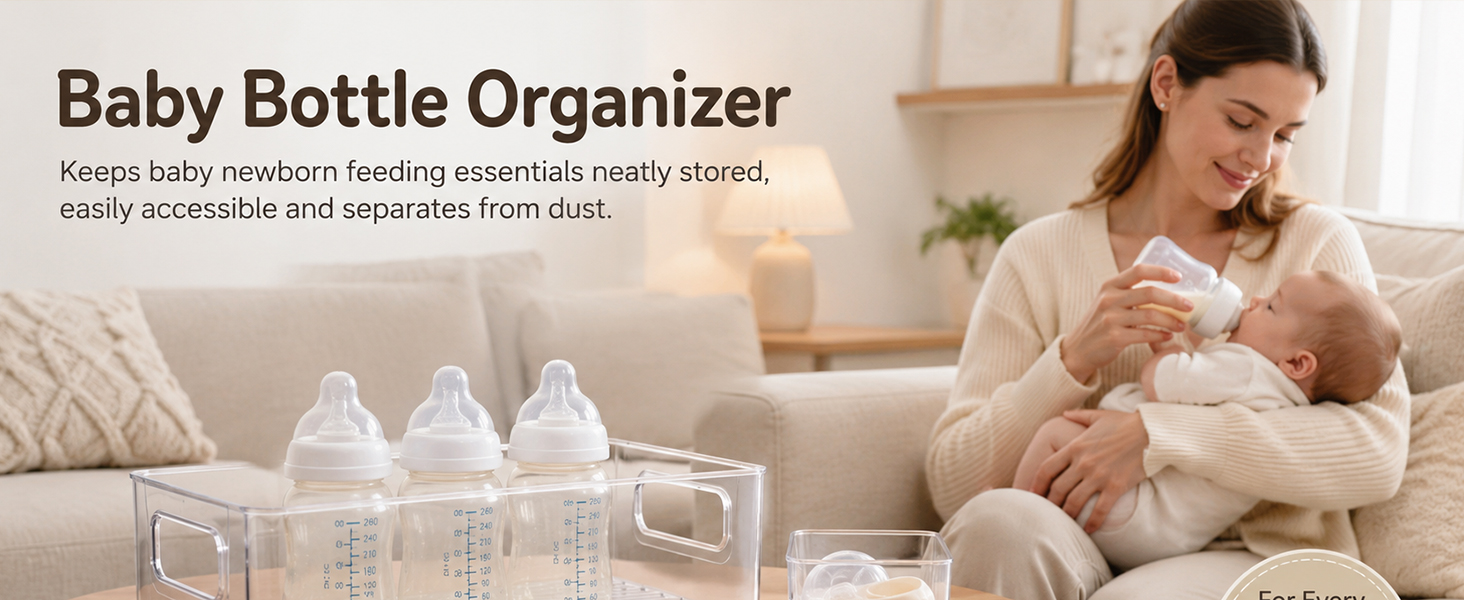
From Countertop Chaos to Calm: A Practical Guide to Baby Bottle Organization
If there is one thing every new parent learns quickly, it is that babies come with a lot of gear. Somewhere between the third night feed and the first pediatrician visit, your kitchen counter quietly transforms into a crowded lineup of bottles, nipples, caps, and drying racks. What started as two or three bottles becomes a small collection, and suddenly you are playing Tetris every time you need to warm a midnight feed. The good news? A little structure goes a long way, and the right setup can turn a stressful corner of your home into one of the most functional.
Why Bottle Clutter Multiplies Overnight
It is rarely about laziness. Bottle clutter accumulates because feeding happens constantly and cleaning happens in waves. You rinse, you stack, you wait for parts to dry, and before you know it, the counter is full again. Add pumping sessions, travel cups, and a few “just in case” spare bottles, and the volume grows faster than you expect.
The real problem is not the number of bottles. It is the lack of a defined home for each piece. When every item has a spot, the whole routine speeds up: you grab, you feed, you wash, you return. When nothing has a spot, you improvise, and improvisation is what creates the mess.
Start With a Clear-Out, Not a Shopping Spree
Before you buy anything, take ten minutes to sort what you actually own. Pull every bottle, ring, nipple, cap, and brush out of the cabinets and group them by size and stage. This step is surprisingly revealing.
- Retire the worn-out: Cloudy bottles, cracked rings, and nipples that have gone soft have done their job. Let them go.
- Match the sets: Reunite bottles with their correct rings and caps so you stop hunting for a match at 2 a.m.
- Store by stage: Keep newborn-flow nipples separate from the faster flows you will need in a few months.
Once you know exactly what you have, choosing a storage solution becomes far easier because you are solving a specific problem rather than guessing at one.
Pick a System That Matches Your Routine
Every family feeds differently, so the ideal setup is the one that fits your day. If you bottle-feed exclusively, you will want vertical capacity and quick access. If you are combination feeding, you need something that keeps clean and used bottles clearly separated. A well-designed baby bottle organizer can handle both, holding bottles upright while keeping small parts contained instead of scattered across the drawer.
Consider your counter space first. A compact, tiered design works beautifully in small kitchens, while a rotating or modular option suits families who want everything visible at a glance. Look for smooth, wipe-clean surfaces, because in this part of the house, spills are not a possibility — they are a certainty.
Good storage does not just hide the mess. It shortens the distance between “I need a bottle” and “the bottle is ready.”
Keep Clean and Dirty Clearly Apart
One of the most overlooked parts of baby bottle storage is separation. Clean bottles should never share space with used ones, and damp parts should never be sealed into a closed container. Set up a simple two-zone system:
- The drying zone: An open rack near the sink where washed parts air out completely.
- The ready zone: A covered or open organizer on the counter holding fully dry, assembled bottles.
This small habit prevents the musty smell that develops when moisture gets trapped, and it means you always know which bottles are safe to use. Rotate stock by placing newly cleaned bottles at the back and pulling from the front, just like a shop shelf.
Take the System on the Road
Diaper bags are another place where bottle chaos hides. A small, rigid insert keeps bottles upright so they do not tip and leak onto spare clothes. Pack one clean bottle, one spare nipple, and a sealed bag for used parts. When you get home, empty the bag immediately — that single habit keeps your travel kit from becoming a permanent laundry problem.
When Bottles Are No Longer the Star
Around the one-year mark, bottles start to fade from daily life, but the storage does not have to become useless. Repurpose organizers for sippy cups, snack containers, straws, and small utensils. Many parents find that the same structure they built for feeding continues to serve them for years, which makes the initial investment feel far more sensible.
Buying Smart, Not Buying More
The market for baby products is enormous, and it is easy to accumulate gadgets you never use. Before adding anything to your cart, ask three questions: Does it fit my space? Will it survive daily washing? Can I clean it without disassembling ten pieces? If the answer to all three is yes, it is probably worth it.
Focus on sturdy materials, thoughtful drainage, and a footprint that suits your kitchen. Read a few reviews, but trust your own routine more than any marketing claim.
Small Habits, Big Difference
Organization is not a one-time project; it is a rhythm. Wash bottles at the same point each evening. Dry them overnight. Rebuild the ready zone each morning. Within a week, the counter clears itself, the midnight feed gets faster, and the kitchen feels calmer — which, during the baby years, is worth more than any gadget on the shelf.
Start small, stay consistent, and let your setup grow with your child. A tidy bottle corner is a tiny victory, but it is one you will appreciate every single day.
Comments are closed